Case Study: Enterprise R&D / Technology
Samsung
R&D Network Infrastructure & Structured Cabling
Sorrento Valley, San Diego, California · Corporate & Logistics Facility · Project #GUW-7919
401
CAT6 Plenum Cables
324
Total Outlet Locations
2 Floors
+ Full WAP Coverage
Project Overview
When Samsung needed to build out the network infrastructure for its major R&D corporate and logistics facility in Sorrento Valley, San Diego, they turned to GotUWired, Southern California's trusted structured cabling and low-voltage integration specialists.
Executed in coordinated phases across the 1st and 2nd floors, the project involved installing 401 new blue CAT6 plenum cables across reception, lab, and office environments, plus dedicated wireless access point drops. Every run was designed, installed, and certified to Category 6 EIA/TIA standards, because in a world-class R&D environment, there is no margin for error.
Scope of Work: Outlet Installations
| Location | Outlet Type | Quantity | Height AFF |
|---|---|---|---|
| 1st Floor Reception | Dual Outlet | 2 | +60" |
| 1st Floor Reception | Single Wall Outlet | 1 | +60" |
| 2nd Floor | Single Outlet | 240 | +60" |
| 2nd Floor | Dual Outlet | 65 | +60" |
| 2nd Floor | Single Wall Outlet | 6 | +60" |
| WAP Locations | Dual Outlet (WAP) | 10 | n/a |
Phase Breakdown
1st Floor Reception
- 2 dual outlet locations installed at +60" AFF
- 1 single wall outlet location installed at +60" AFF
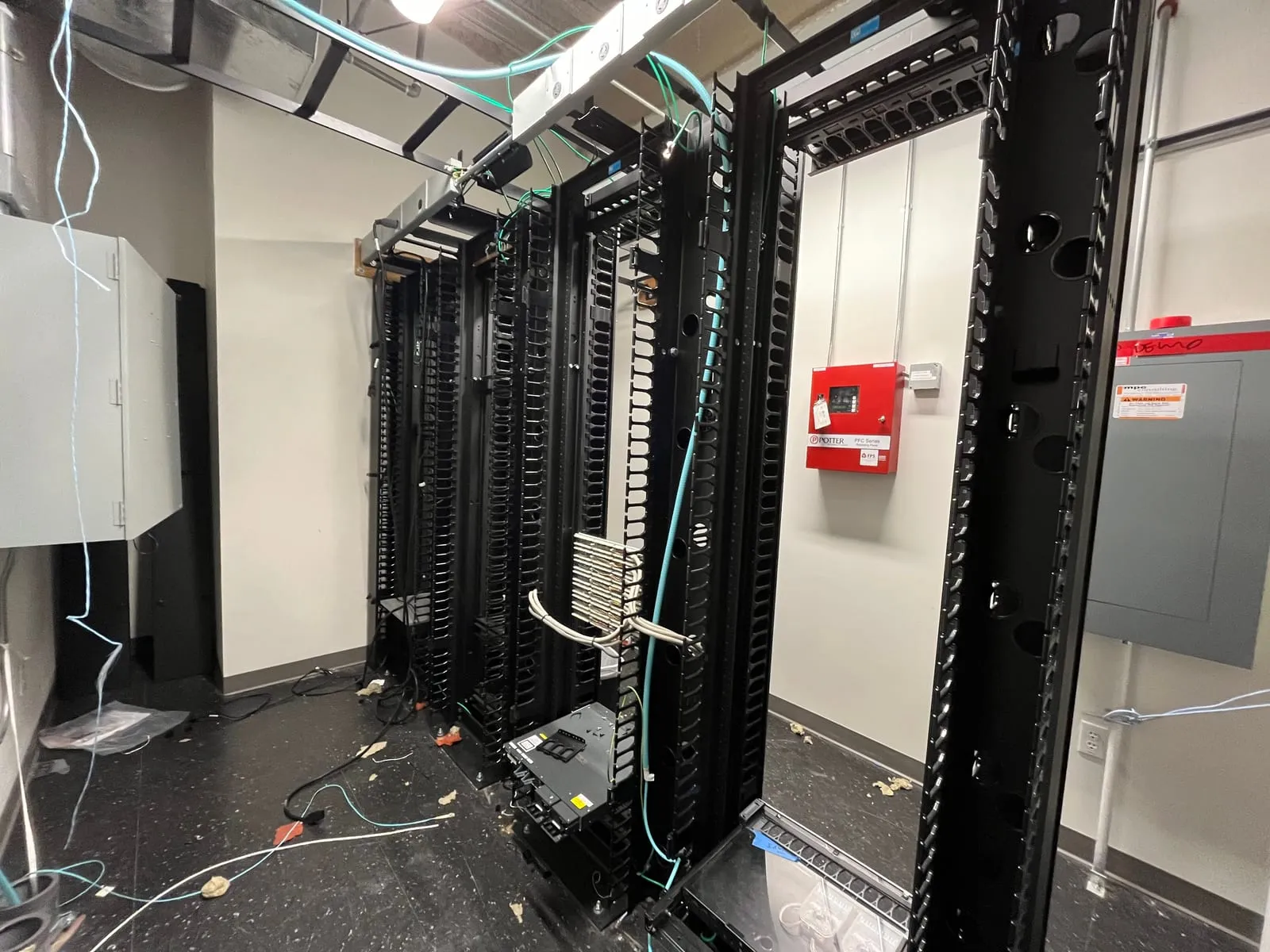
- Demolition and removal of existing cabling from reception to the 2nd-floor lab/office
2nd Floor Lab & Office
- 240 single outlet locations
- 65 dual outlet locations
- 6 single wall outlet locations at +60" AFF
- Total: 311 drops across lab and office environments
Wireless Access Points (WAP)
- 10 dual outlet locations dedicated to wireless access points
- Strategic placement to support full facility wireless coverage
Installation Standards & Best Practices
GotUWired's installation methodology reflects its commitment to craftsmanship and long-term performance. Every cable run on this project met or exceeded the following standards:
- Home-run cabling from the MDF/IDF through ceiling plenum, with no daisy-chaining or splices
- Cables suspended every 5 feet to maintain proper geometry and signal integrity
- All cables terminated on UL-listed Category 6 patch panels and RJ45 outlets
- Full tone-and-test certification to Category 6 EIA/TIA standards
- 401 plenum-rated CAT6 cables chosen for fire-safety compliance in air-handling spaces
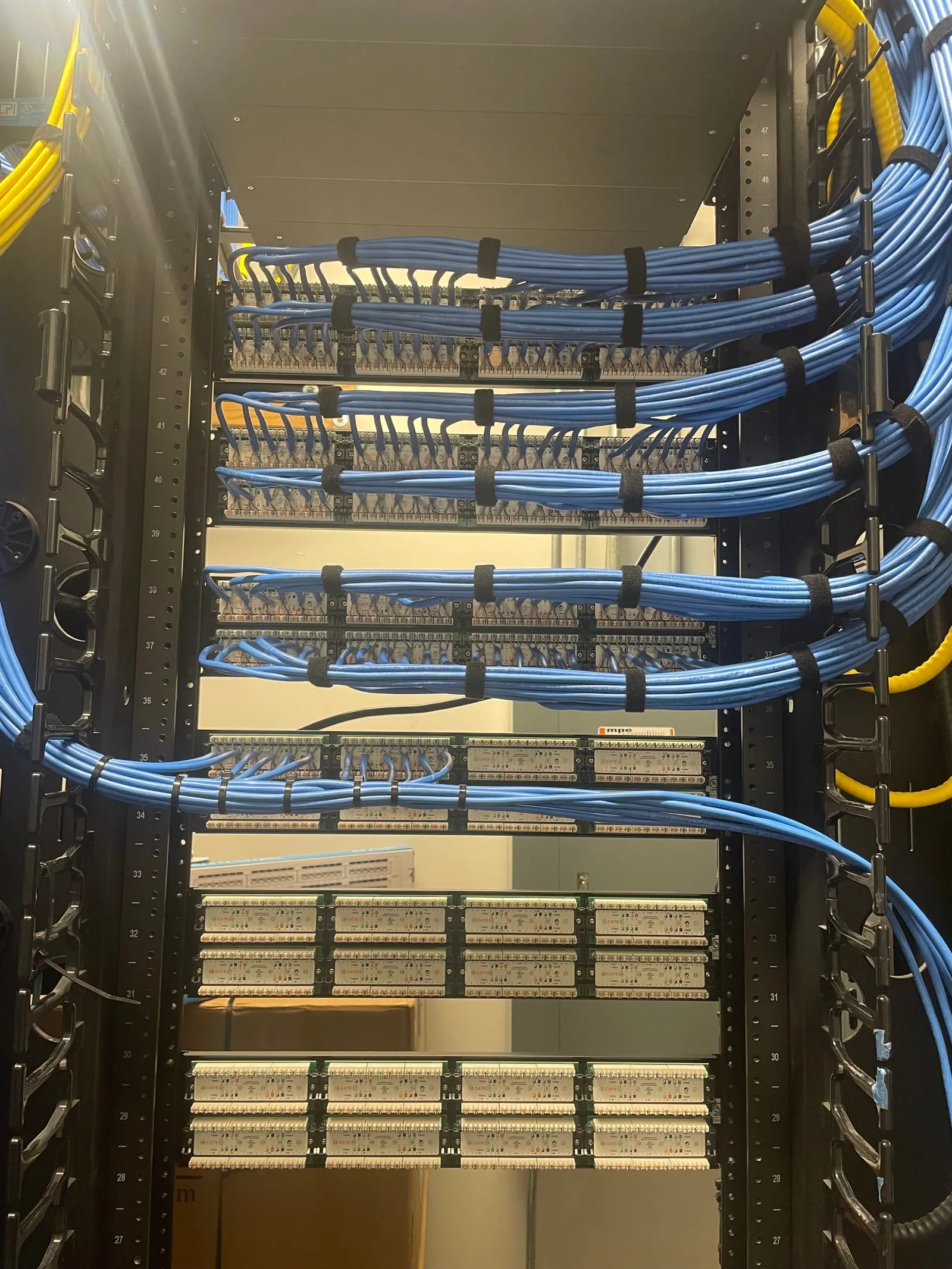
2nd Floor IDF Closet Build-Out
In addition to the cable plant, GotUWired designed and built out the 2nd-floor IDF (Intermediate Distribution Frame) closet to support the full network infrastructure:
- Nine (9) 48-port Category 6 patch panels provisioned and installed
- Full termination of all 2nd-floor cable runs to patch panels
- 30kVA UPS with battery cabinet protecting mission-critical R&D systems
- Note: MDF/IDF racks, rails, and cable managers were furnished by the client
Results & Outcomes
Performance & Reliability
Full Category 6 certification delivers 10 Gbps speeds and PoE+ support, with clean home-run architecture that eliminates the single points of failure common to daisy-chained systems.
Scalability & Future-Proofing
Patch-panel architecture turns network moves, adds, and changes into minutes-long tasks, and the WAP infrastructure pre-positions the facility for Wi-Fi 6E and beyond.
Safety & Compliance
Plenum-rated CAT6 and UL-listed components throughout meet fire code in air-handling spaces and satisfy insurance and inspection requirements.
Operational Efficiency
Organized, labeled, and fully tested infrastructure dramatically reduces IT troubleshooting time and makes onboarding new systems fast and predictable.
Protected & Documented
A 30kVA UPS shields mission-critical R&D systems from power interruptions, while complete documentation keeps future work efficient and low-cost.